
Salem’s Data Center Debate Tests a Fundamental Principle of Oregon’s Land-Use System
As Salem considers whether artificial intelligence facilities qualify under existing zoning rules, the controversy raises broader questions about regulatory certainty and Oregon’s ability to attract investment
A controversial proposal before the Salem City Council is raising questions that extend well beyond the future of one data center. At issue is whether local governments should reinterpret existing development regulations after businesses have relied on those rules to make investment decisions.
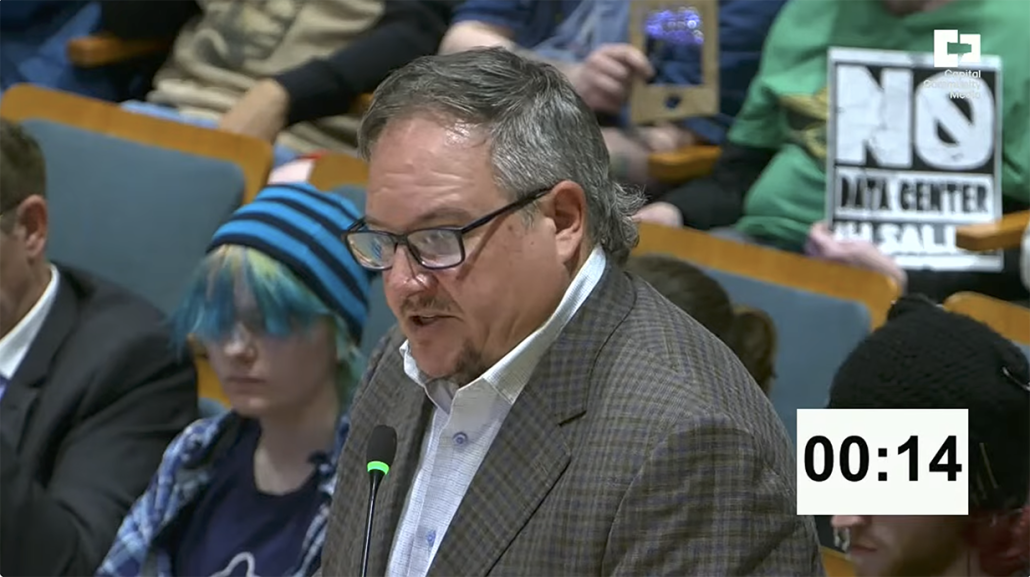
During a November 9 public hearing, councilors considered Resolution 2026-46, which would interpret Salem’s existing data center definition to exclude artificial intelligence and hyperscale computing facilities.
The proposal drew opposition from developers, construction workers, and a coalition of business organizations concerned about attracting future investment.
Salem Chamber CEO Tom Hoffert, representing a coalition including Oregon Business and Industry, the Oregon Business Council, and several regional organizations, emphasized that their concerns were not about whether any particular data center should receive approval.
Instead, the coalition questioned what the interpretation could mean for the predictability of Oregon’s land-use system.
The Goalpost Rule
Oregon’s land-use system includes an important statutory protection commonly known as the goalpost rule.
Under Oregon law, cities generally must evaluate qualifying development applications using the standards and criteria in effect when applications were first submitted.
The principle provides regulatory certainty while preserving local governments’ authority to evaluate proposals against established requirements.
But Salem’s dispute presents a more complicated question: What happens when a city determines that existing regulations should never have permitted a particular use?
City Attorney Dan Atchison argues that Salem’s definition, adopted in 2013 and 2014, contemplated facilities primarily dedicated to data storage and transmission, rather than the continuous computational processing performed by modern AI facilities.
Atchison maintains that Resolution 2026-46 interprets existing code rather than amending it, although subsequent city decisions would be bound by that interpretation.
Interpretation or Changing the Rules?
Attorney Wendy Kellington, representing the proposed Oakline at Mill Creek development, disputes that distinction. She described previous city guidance identifying data centers as permitted uses and questioned whether the city could effectively reverse that understanding after an application was submitted.
In a November 6 letter, Samantha Bayer and Dave Hunnicutt of DJS Land Strategies, representing construction contractors, raised an additional challenge.
Their letter argues that Salem’s existing definition explicitly includes server farms and data farms, facilities that necessarily process information. They contend that excluding modern computing facilities through interpretation, rather than prospective code amendments, undermines the protections Oregon’s goalpost rule is intended to provide.
Lauren Jones of Capstone Partners, an established Mill Creek investor, warned that similar interpretations could affect manufacturing, telecommunications, logistics, and other industries whose technologies continue evolving.
Economic Development by Design
Former Salem City Councilor and Planning Commissioner T.J. Sullivan reminded councilors that Mill Creek Corporate Center was deliberately created to attract industrial investment.
Sullivan recalled working with state lawmakers to acquire surplus state property and convert previously non-tax-producing land into an employment center generating property-tax revenue.
He suggested that major new investments could help Salem finance municipal services and potentially reduce financial burdens on lower-income residents.
The argument places the controversy within Salem’s broader efforts to expand its tax base while addressing anticipated municipal budget deficits.
Can Salem Have Both?
Supporters of the resolution, including residents Andy Andeen and Claudia Burton, questioned whether older zoning language adequately encompasses AI computing facilities, citing differences in electrical demand, cooling, water consumption, and operational intensity.
Both maintained that earlier staff guidance does not necessarily establish legal permission for a pending development.
But developer Chris Blackburn, who owns nearby property, challenged the choice confronting the council.
Blackburn argued that Salem should demand exceptionally high standards for water, noise, power, and community benefits rather than push these facilities into jurisdictions with potentially weaker requirements.
He pointed to Salem’s existing moratorium, data center task force, and developing code amendments as opportunities to establish those protections.
Adopting the disputed interpretation instead, he warned, could effectively outsource the decision to Oregon’s Land Use Board of Appeals and the courts rather than allow Salem residents to determine appropriate standards through their local government.
A Bellwether for Oregon
Council is scheduled to resume deliberations Thursday, November 12.
Whatever the outcome, the controversy illustrates a challenge facing communities throughout Oregon as technology evolves faster than existing land-use regulations.
Communities have legitimate reasons to establish different development priorities and environmental requirements. Businesses need predictable rules when evaluating where to invest.
The question is not whether every Oregon community must adopt identical policies, but whether local governments can establish their own standards while maintaining confidence that those standards will be applied consistently.
Salem’s decision may offer an early indication of how Oregon communities reconcile those competing responsibilities.
