
Caucus Cohesion or Cage Match?
Speaker Challengers Step Up as House Democrats Retreat and Regroup
One week after an election that saw deep blue acrylic poured over the nation’s congressional map, Oregon Democrats are poised to revisit their own canvas and decide whether to touch up the caucus artwork ahead of the 2027 legislative session.
In two weeks, House Democrats will hold their biennial retreat to select leaders for the next legislative session. There will be more than chicken and mashed potatoes on the menu.
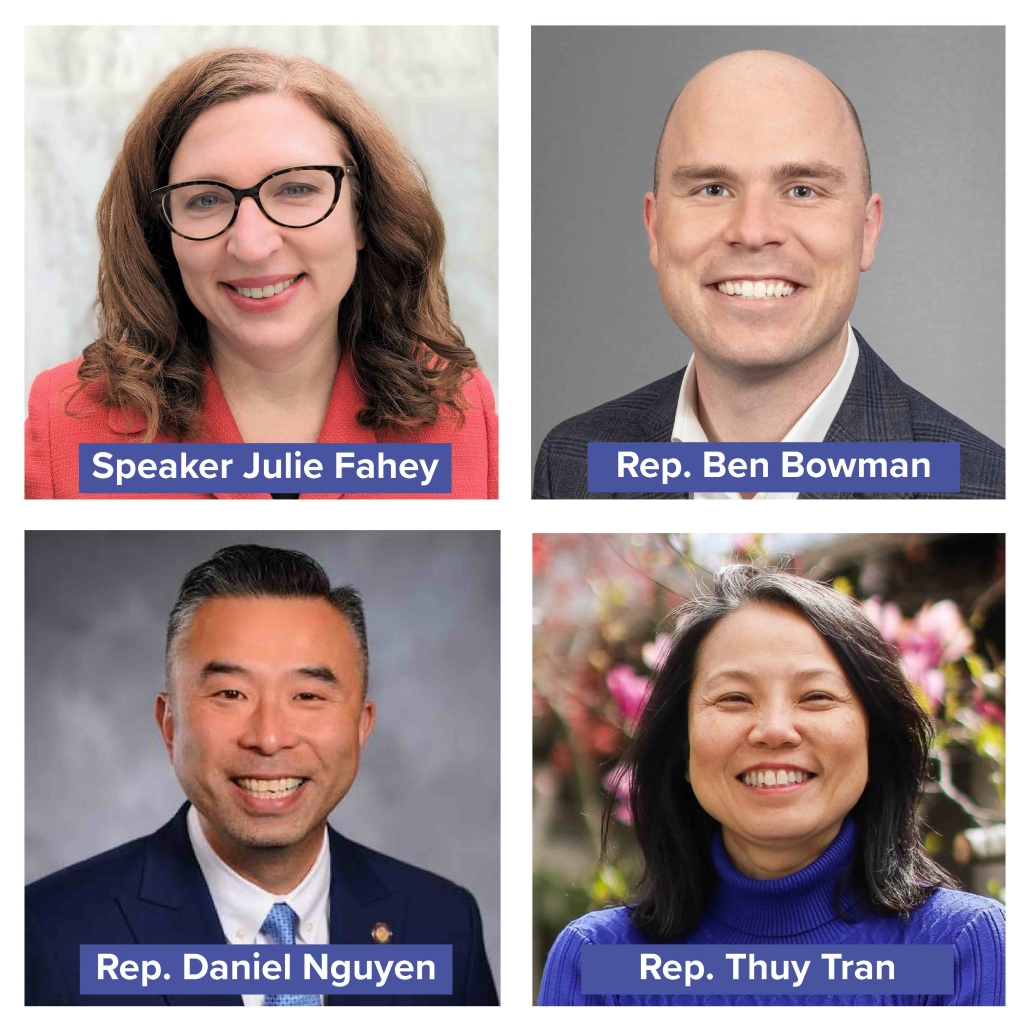
The Political Center has confirmed that Reps. Daniel Nguyen and Ben Bowman have both decided challenge Rep. Julie Fahey for Speaker of the House. Both challengers have been working the phones with other members to judge their level of support. There is also a chance that Rep. Thuy Tran will enter the fray with an official announcement on Thursday.
Discontent with leadership is nothing new in a majority party, but directly challenging it is exceedingly rare in Oregon. The last time a member directly challenged an assumed chamber leader was in 1993 when Sen. Mae Yih was a lone holdout, refusing to vote for Bill Bradbury for Senate President and wanting the job herself. Democrats held a slim 16-14 edge in the chamber and Yih’s vote was needed to elect Bradbury.
Yih led the Senate on a marathon Vote-O-Rama that lasted for days until Democratic Sen. Bill Dwyer told Yih that if she didn’t vote for Bradbury in the next vote, he was going to side with Republicans, and she wouldn’t receive anything. Yih relented in exchange for being elected as the Senate President Pro-Tempore.
A number of House Democrats have expressed disappointment with leadership in the past year, most notably after the transportation package debacle of the last few sessions. Fahey is well regarded as strong on policy, but some members believe a more focused and direct leadership style is necessary to advance key priorities in the year ahead.
“If there is no struggle, there is no progress.”
— Frederick Douglass
The fact that multiple members are willing to challenge the throne is a clear signal of unrest. Both Nguyen and Bowman are recognized as strong members with leadership styles distinct from Speaker Fahey.
I spoke with multiple members on the agreement of anonymity who said Fahey frustrated caucus members by often being too methodical in her decision-making and wanting to make too many decisions on her own, rather than empowering others with clear direction. One longtime member dissected the problem this way: “She hasn’t built a strong inner circle to help convey to the caucus clear direction. She keeps too many things close to herself and has been reluctant to trust and delegate to others.”
Bowman offers his experience as majority leader and problem solving as his résumé, while Nguyen offers a leadership style based on his years of experience as a small business owner, expanding his restaurant chain even while managing the time-consuming duties of a state legislator.
Bowman, the coalition convener; Nguyen, the disciple of delegation.
Bowman has also been working strategically at gaining loyalists. His own political action committee donated $555,000 to the caucus PAC this year to help elect fellow members. That is in addition to tens of thousands more to some of the newest members. Fahey was right behind at $470,000 to the caucus PAC.
“It’s really a matter of style,” one member noted. “Julie is well liked and respected for being a thoughtful legislator, but not sharing those thoughts has sometimes led to a lack of transparency and trust.”
Said another, “She tries to make decisions by herself without including others.”
Members also point to multiple factions within the larger caucus that would require assembling to win the Speaker vote. There is the BIPOC Caucus, which has had its disagreements (a reason for a potential run by Tran); the Moderate Caucus, which has often felt unheard; and the growing DSA contingent, to name a few.
With two weeks before the Democratic Caucus gathers to nominate their candidate for Speaker, the dust is clearly unsettled. There is no guarantee that any challenger will be able to muster the majority vote necessary to gain the reins of leadership. One or all could drop out of the running if the telephone tally doesn’t garner enough support to provide the math necessary to be successful.
Under caucus procedures, if multiple candidates present themselves for nomination, a vote is taken. If none gain a majority, the last place finisher is eliminated and a revote takes place between the top two candidates.
Fahey could retain the role of Speaker if any challenger is unable to garner the support of the other challenger’s voters.
In that case, the Mark Twain admonition comes to mind. “The reports of my death are greatly exaggerated.”
