
Part I — Canola at a Crossroads
Coexistence Requires a Delicate Balance
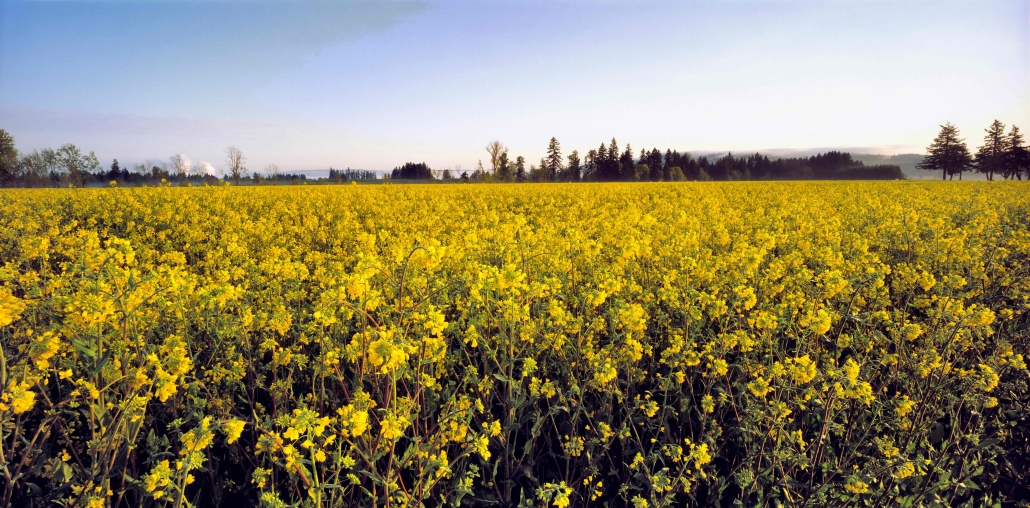
Like a prickly weed that won’t stay pulled, the debate over growing canola in the Willamette Valley keeps popping back up in Salem as legislators grapple with how to regulate the crop while protecting Oregon’s high-value specialty seed industry.
Current restrictions on where and how much canola farmers can grow within the 3-million-acre Willamette Valley Protected District are set to expire on Jan. 2, 2028. Farmers have spent decades trying to reach a long-lasting agreement for co-existence between canola and genetically similar vegetable seed, coming tantalizingly close before falling just short during the 2024 short session.
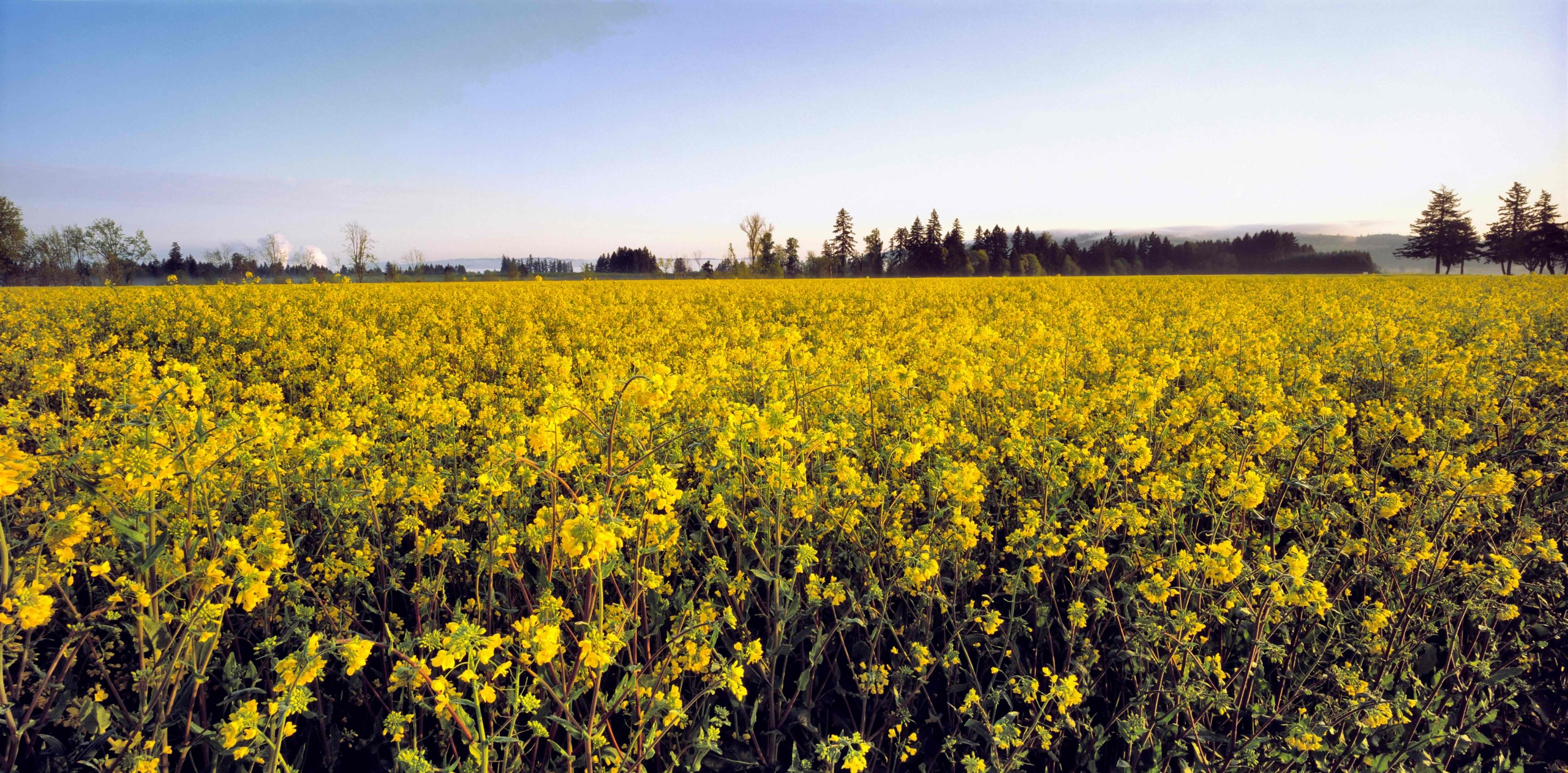
Canola blossoms in the Willamette Valley. (File photo)
How the Legislature proceeds in 2027 could have significant economic consequences, with tens of millions of dollars potentially at stake.
On the one hand, some Willamette Valley growers view canola as a beneficial rotation crop with grass seed, improving soil health while providing another source of revenue. Growing canola also takes less water — an important consideration as drought becomes increasingly widespread and severe.
The problem, however, is that canola cross-pollinates with other specialty seed crops, specifically brassicas like broccoli, mustard, turnips, and cabbage. It can’t be grown unfettered, which is why the protected district caps canola at 500 acres and requires three miles of “isolation distance” to prevent cross-pollination.
It’s a delicate operation, as Kenny Smith, president of the Willamette Valley Specialty Seed Association (WVSSA), explains. Customers from around the world buy Oregon specialty seed for its high quality and genetic purity.
“When you buy a pack of seed, you expect it to look like the picture on the package,” Smith said. “The repercussions of cross-pollination are very significant. Once customer confidence is lost, we never get it back.”
Pinning Map Explained
In order to protect against cross-pollination in the Willamette Valley Protected District, WVSSA manages an online pinning map that tracks where its members’ fields are located. Seed producers place a digital “pin” on the map, signaling which crops they plan to grow. Pinning is done on a first-come, first-serve basis, and the map is updated every year, though it is not state-regulated.
WVSSA identifies potential conflicts with canola fields based on the applications submitted each year to the Oregon Department of Agriculture, which enforces the acreage cap and isolation distance. If ODA agrees there is a conflict, then both parties must agree in writing that they accept the increased risk of cross-pollination, and what steps they will take to mitigate it.
“It’s not perfect in the sense that everyone can’t grow whatever they want, whenever they want, all the time,” Smith said. “But it is perfect in the sense that this gives (specialty seed) growers and buyers the confidence that seed is as genetically pure as possible.”
That genetic purity is critically important, Smith said. All lots are tested for outcrossing, with no more than one-quarter of 1% typically allowed. Europe and Japan also have zero tolerance for any genetically modified material.
Otherwise, the crop may be fully rejected and would have to be destroyed.
Agreement Comes Up Short
In 2024, sides nearly came to an agreement in the form of HB 4059-7, which would have lifted the cap for growing non-GMO canola while maintaining the three-mile isolation distance. For genetically modified canola, the cap would have been 500 acres and a six-mile isolation distance.
These rules were later negotiated by a work group convened by Gov. Tina Kotek, though differing approaches to GE canola eventually stalled the deal and legislators voted instead to extend the current regulations.
Now, the January 2028 sunset is once again drawing close. Finding an enduring resolution requires three things: where this decades-long debate has been, what’s at stake today, and what comes next.
“WVSSA wants to work with all growers to the extent possible to allow canola where it will not impact other high-value crops in the Willamette Valley,” Smith said.
